
Nighttime GERD can make it difficult to fall asleep, wake you with a burning sensation in your chest, or leave an unpleasant sour taste in your mouth. For some people, acid reflux also causes coughing or throat irritation during the night.
Sleeping on your left side, elevating your upper body, and finishing meals at least three hours before bedtime may help reduce nighttime reflux. Persistent symptoms, however, may require medical treatment.
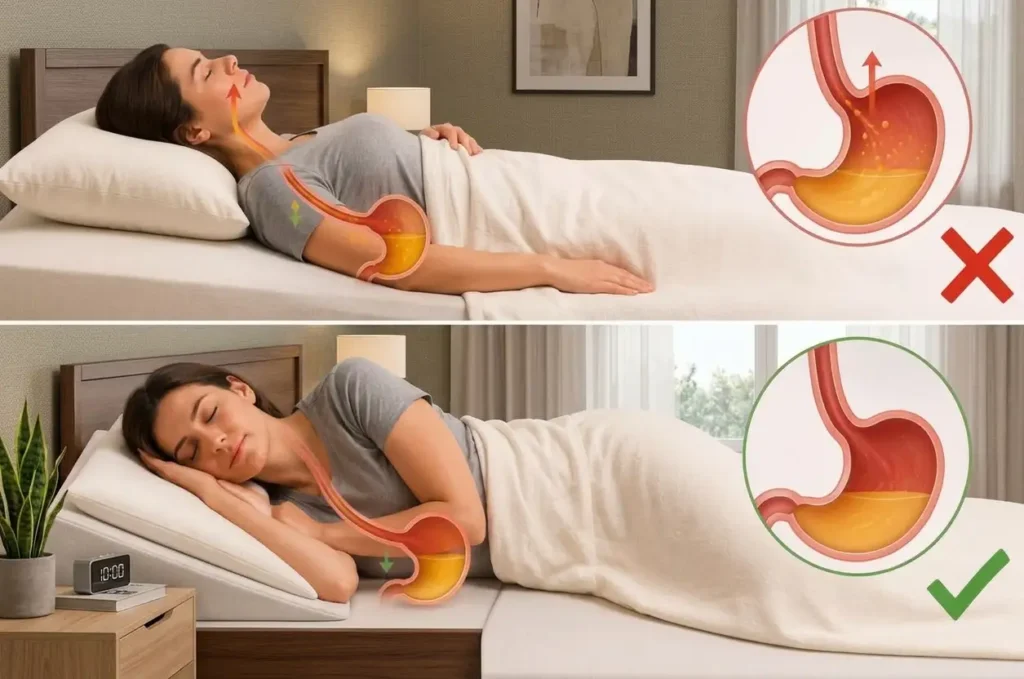
Nighttime GERD Symptoms: What Happens During Sleep?
Gastroesophageal reflux disease (GERD) occurs when stomach contents repeatedly flow backward into the esophagus, causing troublesome symptoms or complications.
Nighttime GERD symptoms may include:
- Heartburn: A burning sensation behind the breastbone, especially after lying down.
- Regurgitation: Stomach contents rising into the throat or mouth, sometimes producing a sour or bitter taste.
- Coughing or throat irritation: Reflux may contribute to coughing, hoarseness, or throat discomfort, although these symptoms can have other causes.
- Choking sensations: Some people wake suddenly with a sensation of fluid in their throat or difficulty clearing it.
- Interrupted sleep: Reflux discomfort may cause repeated awakenings and difficulty returning to sleep.
Not everyone with GERD experiences typical heartburn. However, nighttime coughing, choking, or sleep disruption alone cannot establish a GERD diagnosis.
The National Institute of Diabetes and Digestive and Kidney Diseases (NIDDK) explains that GERD may produce both typical digestive symptoms and symptoms involving the throat or respiratory system.
Why Does GERD Get Worse at Night?
Gravity provides less protection. When you stand or sit upright, gravity helps return refluxed stomach contents toward the stomach. Lying flat reduces this advantage.
The esophagus clears acid more slowly during sleep. Swallowing and saliva production decrease while sleeping, reducing some of the mechanisms that normally help clear and neutralize acid.
Late meals increase the likelihood of reflux. Going to bed shortly after eating means that stomach contents may still be present in larger amounts when you lie down.
Sleeping position affects acid exposure. Research discussed in the American College of Gastroenterology (ACG) clinical guideline indicates that reflux tends to be worse in the right-side sleeping position than on the left side.
Other contributing factors may include excess abdominal weight, smoking, a hiatal hernia, and certain medications. However, nighttime symptoms can occur even without these factors.
How to Reduce GERD Symptoms at Night: 5 Practical Strategies
1. Sleep on Your Left Side
Sleeping on your left side may reduce nighttime acid reflux compared with sleeping on your right side. This is partly because the position of the stomach makes it harder for its contents to flow back into the esophagus.
Try starting the night on your left side. A body pillow may help you maintain a comfortable position if you tend to roll onto your back or right side.
Combining left-side sleeping with upper-body elevation may also help when symptoms persist.
2. Elevate the Head of Your Bed
Sleeping completely flat may make reflux more troublesome.
Raising the head of the bed by approximately 6–8 inches (15–20 cm) can help reduce nighttime acid exposure.
Options include:
- A properly designed reflux wedge pillow that supports the upper body.
- An adjustable bed that raises the torso.
- Secure bed risers positioned under the head-end legs, where appropriate for the bed.
Simply stacking ordinary pillows under your head is less reliable because it may bend your neck without adequately elevating your torso.
The ACG clinical guideline suggests head-of-bed elevation for people experiencing nighttime GERD symptoms.
3. Stop Eating 2–3 Hours Before Bed
The ACG suggests avoiding meals within two to three hours of bedtime, while the NIDDK recommends waiting at least three hours before lying down.
For example, if you usually go to bed at 11 p.m., aim to finish dinner by 8 p.m.
You may also benefit from avoiding unusually large evening meals and remaining upright after eating.
4. Identify Your Personal Food Triggers
Some people notice that particular foods or drinks worsen their nighttime reflux.
Commonly reported triggers include:
- High-fat meals
- Chocolate
- Coffee and other caffeinated drinks
- Alcohol
- Peppermint
- Tomatoes and citrus fruits
- Spicy foods
However, not everyone with GERD needs to avoid every food on this list. Evidence for universal food restrictions is limited.
Instead, keep a simple food and symptom diary. Record your evening meal, when you finished eating, when you went to bed, and whether symptoms interrupted your sleep.
If a particular food repeatedly causes problems, consider reducing it and assessing whether symptoms improve.
For additional information, see the NIDDK dietary recommendations for GERD.
5. Avoid Smoking and Manage Weight When Relevant
Smoking can worsen GERD symptoms, and quitting may help reduce reflux.
Excess body weight can also increase pressure around the stomach and is associated with GERD.
For people who are overweight or have obesity, weight loss may improve reflux symptoms. The ACG guideline strongly recommends weight loss for GERD symptom improvement in these groups.
What to Do When You Wake Up With Acid Reflux
If you wake up with familiar, mild heartburn or regurgitation that resembles your previous reflux episodes, these steps may help:
- Sit upright. Avoid immediately lying flat again.
- Allow the discomfort to settle. Remaining upright may help refluxed stomach contents clear.
- Adjust your sleeping position. When you return to bed, consider your left side with your upper body elevated.
- Use medication only as directed. If you have an appropriate antacid or another reflux treatment recommended by your clinician or pharmacist, follow its instructions.
- Record the episode. Note whether it followed a late meal, a particular food, or a different bedtime routine.
These self-care measures are intended for mild, familiar reflux symptoms. They are not appropriate substitutes for medical evaluation when symptoms are new, severe, or unusual.
Do not assume that new or severe chest pain is caused by GERD. Heart problems can produce symptoms that resemble heartburn. Seek emergency assistance for severe or persistent chest pain, particularly when accompanied by breathlessness, sweating, or pain spreading to the arm or jaw.
Nighttime GERD Treatment: When Lifestyle Changes Aren’t Enough
Lifestyle adjustments can be helpful, but some people need medication to control symptoms or heal inflammation in the esophagus.
Antacids
Antacids neutralize stomach acid and can provide quick, short-term relief from occasional heartburn.
However, they do not treat every cause of reflux or reliably heal significant esophageal inflammation. Frequent use should be discussed with a healthcare professional.
H2 Receptor Blockers
H2 blockers, such as famotidine, reduce stomach acid production.
They may help some people with nighttime symptoms but are generally less effective than proton pump inhibitors for healing erosive esophagitis.
When H2 blockers are taken regularly at bedtime, their acid-suppressing effect may decrease over time. A clinician may recommend occasional bedtime use for selected patients with nighttime reflux, as discussed in the ACG clinical guideline.
Proton Pump Inhibitors (PPIs)
PPIs, including omeprazole and esomeprazole, suppress stomach acid production and are commonly used to treat GERD.
They are generally more effective than H2 blockers at healing erosive esophagitis.
For routine GERD treatment, the ACG recommends taking standard PPIs approximately 30–60 minutes before a meal rather than at bedtime, unless a clinician provides different instructions.
PPIs are not intended to provide immediate relief from a sudden reflux episode.
Although PPIs are generally effective and well tolerated, their benefits, possible adverse effects, and duration of treatment should be reviewed when longer-term treatment is needed.
The NIDDK GERD treatment guide provides further information about these medication classes.
What if Treatment Doesn’t Work?
If symptoms persist despite appropriate treatment, a clinician may review medication timing, consider other causes, and determine whether additional testing is necessary.
Depending on the circumstances, testing may include upper endoscopy or reflux monitoring.
For some people with confirmed GERD, a specialist may recommend an anti-reflux procedure. These treatments are generally considered when there is a clear medical indication rather than as a first-line solution for occasional nighttime heartburn.
When to See a Doctor About Nighttime Reflux
Arrange a medical evaluation if:
- Heartburn or regurgitation frequently interrupts your sleep.
- Symptoms continue despite lifestyle changes or appropriate treatment.
- You have persistent coughing, hoarseness, or unexplained nighttime choking episodes.
- You experience difficulty or pain when swallowing.
- You have unexplained weight loss.
- Symptoms repeatedly return after treatment.
Seek urgent medical care if you vomit blood or have black, tar-like stools, as these may indicate gastrointestinal bleeding.
Seek emergency medical assistance for severe or persistent chest pain, especially with shortness of breath, sweating, or pain spreading to the arm or jaw. Do not assume these symptoms are caused by reflux.
FAQ
Yes. Some people with GERD experience regurgitation without noticeable heartburn. Coughing, throat irritation, and hoarseness may also occur, although these symptoms do not necessarily indicate GERD.
Reflux can sometimes contribute to throat irritation, coughing, or choking sensations. However, sleep-related breathing disorders and respiratory conditions can cause similar symptoms. Repeated episodes warrant medical evaluation.
Drinking water is not an established treatment for nighttime GERD. Although swallowing helps clear acid from the esophagus, there is insufficient evidence that drinking water before bedtime prevents nighttime reflux.
Some people improve with changes in meal timing, sleeping position, and other relevant habits. Others require medication, particularly when symptoms are frequent or esophageal inflammation is present.
Persistent GERD can cause inflammation of the esophagus and, in some patients, complications such as esophageal narrowing or Barrett’s esophagus. Regular nighttime symptoms should not be ignored, particularly when warning signs develop.
Key Takeaways
Nighttime GERD may cause heartburn, regurgitation, coughing, and interrupted sleep.
Sleeping on your left side, elevating the head of your bed, and avoiding late meals may help reduce nighttime reflux.
If symptoms remain frequent despite these changes, medical treatment or further evaluation may be necessary.