
Finding meals that work with acid reflux doesn’t have to mean eating the same plain foods every day. Simple changes to ingredients, cooking methods, and portion sizes can help you prepare satisfying breakfasts, lunches, and dinners while avoiding foods that make your symptoms worse.
If you’re wondering what to eat with acid reflux, these five easy meal ideas are a practical starting point:
- Spinach frittata with salad and whole-grain toast
- Chicken and rice bowl with steamed vegetables
- Egg and avocado wrap with fresh greens
- Lean chicken burger with roasted vegetables
- Red lentil pasta with creamy pumpkin sauce
Each recipe includes ingredient quantities, preparation instructions, and substitutions for common reflux triggers.
No meal is guaranteed to prevent heartburn. Foods that are comfortable for one person may cause symptoms in another. The National Institute of Diabetes and Digestive and Kidney Diseases (NIDDK) recommends identifying personal food triggers rather than assuming everyone with gastroesophageal reflux disease (GERD) must avoid the same ingredients.
1. Spinach Frittata with Salad and Whole-Grain Toast

Breakfast or light lunch | Approx. prep: 8–10 minutes | Cook: 8–10 minutes | Servings: 1
A frittata is an easy way to combine eggs, vegetables, and herbs in one meal. Serve it with toast and a small salad for a quick breakfast or lunch.
This version uses spinach and zucchini instead of fatty meats or heavily seasoned fillings. It also avoids the creamy dressings and large amounts of cheese that can make some egg dishes higher in fat.
Ingredients
- 1 large egg and 2 egg whites
- ½ cup fresh spinach
- ¼ cup finely chopped zucchini
- 1 teaspoon olive oil
- 1 slice whole-grain bread
- 1 cup lettuce or mixed salad greens
- 1 tablespoon plain low-fat yogurt, optional
- Fresh parsley, basil, or dill to taste
Instructions
- Wash and chop the vegetables, then beat the egg and egg whites together in a small bowl.
- Heat the olive oil in a nonstick skillet over medium-low heat.
- Add the zucchini and cook for 2–3 minutes until it begins to soften.
- Add the spinach and cook briefly until wilted.
- Pour in the eggs, reduce the heat, and cover the skillet.
- Cook until the frittata is fully set, approximately 5–7 minutes.
- Serve with toasted whole-grain bread and salad greens. If tolerated, use a little plain low-fat yogurt mixed with herbs as a dressing.
Make It More Reflux-Friendly
If whole eggs cause discomfort: Use 3–4 egg whites instead of the whole egg and two whites. This reduces the meal’s fat content.
If raw vegetables cause bloating: Replace the salad with cooked zucchini, spinach, or green beans.
If you normally use hummus or tahini dressing: Check the ingredients. Hummus may contain garlic, lemon juice, and tahini. These aren’t universal GERD triggers, but they may cause symptoms in some people. Try a small portion or use a dressing made from tolerated ingredients.
If you want to add cheese: Choose a small amount of reduced-fat cheese rather than a heavy layer of full-fat cheese.
Using more egg whites and less added fat may make this meal more comfortable for people who experience reflux after high-fat foods.
For more morning meal options, see our GERD-friendly breakfast guide.
2. Chicken and Rice Bowl with Steamed Vegetables
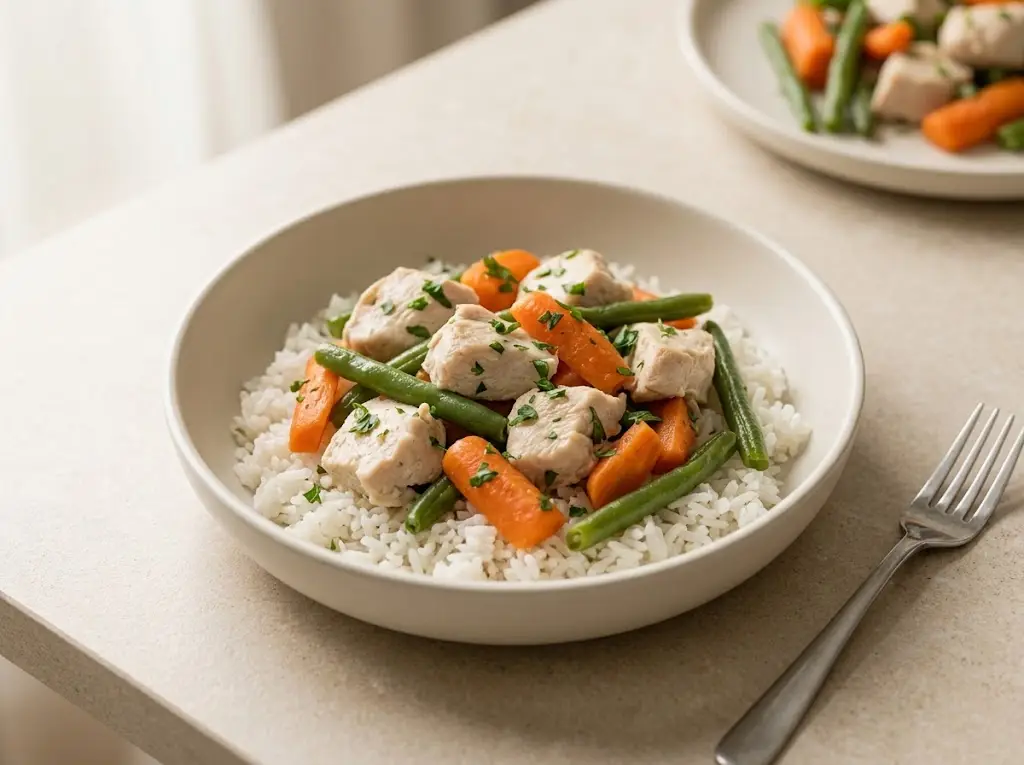
Lunch or dinner | Approx. prep: 10 minutes | Cook: 10–15 minutes with precooked rice | Servings: 1
A chicken and rice bowl is a flexible meal that can be prepared in advance and reheated when needed.
The combination of lean protein, rice, and cooked vegetables allows you to avoid tomato-based sauces, deep-fried ingredients, and strongly spiced toppings if those foods aggravate your reflux.
Ingredients
- 100–120 g (approximately 3½–4 oz) boneless, skinless chicken breast
- ½ cup cooked brown or white rice
- ½ cup sliced carrots
- ½ cup green beans or zucchini
- 1 teaspoon olive oil
- 1 tablespoon chopped fresh parsley
- A small pinch of salt, optional
- 1–2 tablespoons water or unsalted broth without trigger ingredients
Instructions
- Prepare ½ cup of cooked rice in advance, or cook a small portion of dry rice according to the package instructions.
- Cut the chicken into bite-sized pieces.
- Heat the olive oil in a nonstick skillet over medium heat.
- Add the chicken and cook until it reaches an internal temperature of 165°F (74°C).
- Steam the carrots and green beans until tender.
- Combine the rice, chicken, and vegetables in a bowl.
- Add a small amount of water or tolerated broth if you prefer a moister texture.
- Finish with chopped parsley.
Make It More Reflux-Friendly
If brown rice causes bloating: Try white rice. Both can fit into a balanced eating plan, and there is no requirement to eat brown rice when managing GERD.
If garlic or onion triggers symptoms: Use parsley, basil, thyme, or rosemary instead of garlic powder, onion powder, or heavily seasoned sauces.
If you prefer a vegetarian meal: Replace the chicken with firm tofu. Legumes are another option, although they may cause bloating in some people.
If the portion feels too large: Serve part of the meal later rather than forcing yourself to finish it all at once.
Meal-prep tip: Cook several servings of rice and chicken ahead of time. Refrigerate promptly in shallow, covered containers and use refrigerated leftovers within 3–4 days, reheating thoroughly before serving.
3. Egg and Avocado Wrap with Fresh Greens
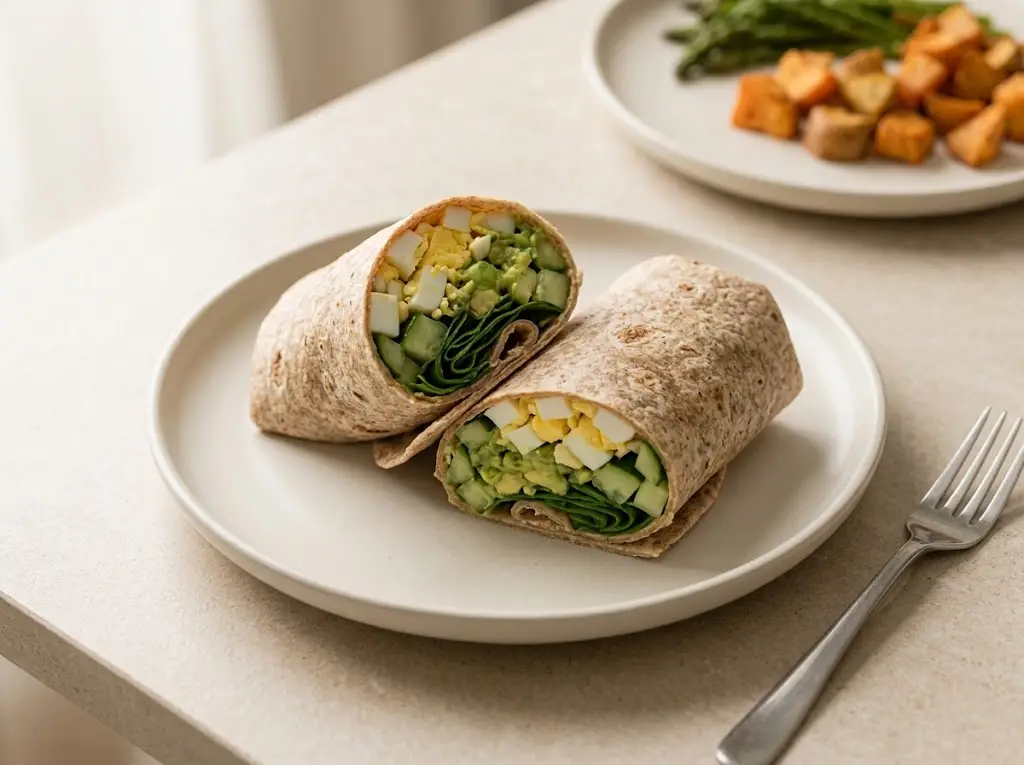
Lunch | Approx. prep: 10 minutes | No cooking required with prepared eggs | Servings: 1
An egg and avocado wrap can be a convenient packed lunch. However, avocado and egg yolks both contribute fat, so the original combination may not suit everyone with reflux.
This version keeps the avocado portion small and uses additional egg whites for protein.
Ingredients
- 1 hard-boiled egg, prepared in advance
- 1 hard-boiled egg white, prepared in advance
- 2 tablespoons mashed ripe avocado
- 1 small whole-wheat tortilla
- ½ cup fresh spinach or lettuce
- 2 tablespoons finely diced cucumber
- 1 tablespoon plain low-fat yogurt, optional
- Fresh parsley or dill to taste
Instructions
- Peel and chop the prepared hard-boiled egg and egg white.
- Mash the avocado in a bowl.
- Combine the egg, egg white, avocado, and herbs.
- If needed, mix in a little plain low-fat yogurt to soften the filling.
- Place the greens and cucumber on the tortilla.
- Add the egg mixture, fold the sides inward, and roll tightly.
Make It More Reflux-Friendly
If avocado triggers reflux: Omit it and use a little plain low-fat yogurt, provided you tolerate dairy.
If egg yolks seem problematic: Replace the whole egg with additional egg whites.
If you use hummus instead of yogurt: Choose a version without garlic or lemon if those ingredients trigger symptoms. Be mindful of portion size, especially if the hummus contains substantial tahini or oil.
If everything-bagel seasoning bothers you: Use fresh herbs instead. Some blends contain garlic and onion.
If whole-wheat tortillas cause bloating: Try a smaller tortilla or a different grain product that you tolerate.
Avocado contains healthy unsaturated fats, but large portions may still trigger symptoms in people sensitive to high-fat meals. Start with the suggested two tablespoons and adjust as needed.
The American College of Gastroenterology’s GERD guideline suggests avoiding foods that trigger symptoms, while recognizing that the evidence supporting many individual food restrictions is limited.
Make-ahead tip: Prepare the cooked eggs and wash the vegetables in advance. Assemble the wrap shortly before eating for a better texture, and keep perishable ingredients refrigerated until needed.
4. Lean Chicken Burger with Roasted Vegetables
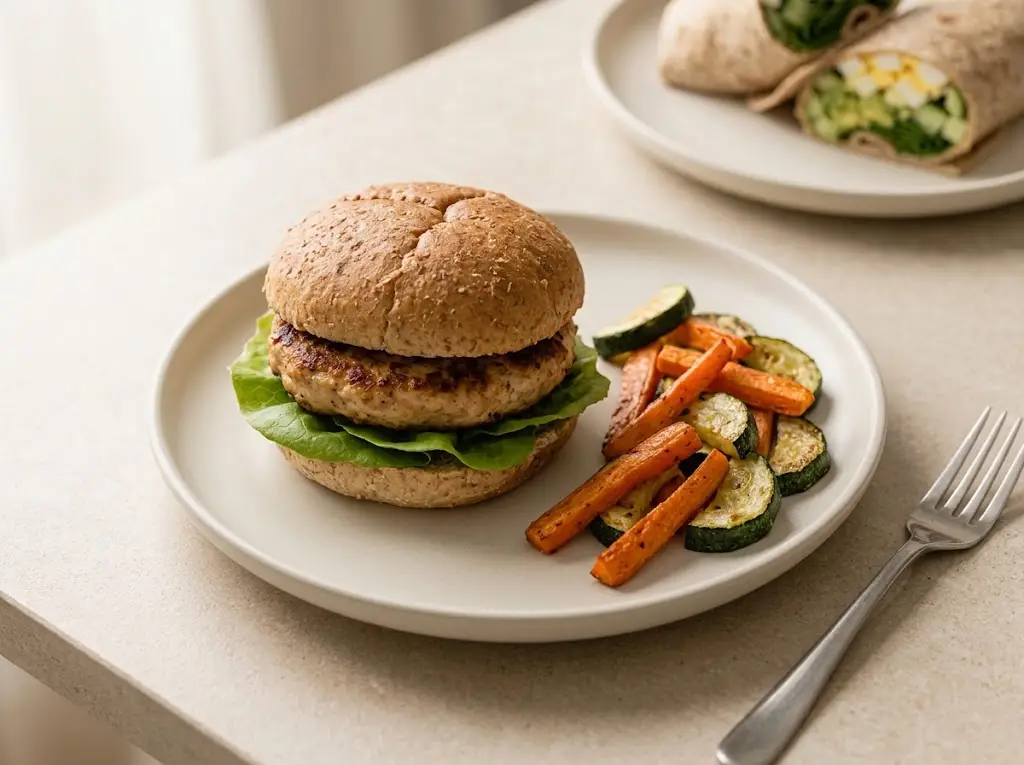
Lunch or dinner | Approx. prep: 10 minutes | Cook: varies by patty type; allow about 20–25 minutes for the vegetables | Servings: 1
Frozen chicken or turkey burgers can be convenient when you don’t have time to prepare protein from scratch. However, not every packaged burger is a good starting choice for someone with reflux.
Some products contain substantial amounts of fat, garlic, onion, chili, or other seasonings that may worsen symptoms in sensitive individuals.
Choosing a lean, lightly seasoned patty allows you to build a simple meal without relying on fried toppings or heavy sauces.
Ingredients
- 1 lean chicken or turkey burger patty, approximately 100–120 g (3½–4 oz)
- 1 small whole-grain bun or ½ cup cooked brown rice
- ½ cup sliced zucchini
- ½ cup chopped carrots
- 1 teaspoon olive oil
- 1–2 lettuce leaves
- Fresh parsley or thyme
- 1 tablespoon plain low-fat yogurt, optional
Instructions
- Preheat the oven to 400°F (200°C).
- Cut the zucchini and carrots into bite-sized pieces.
- Toss the vegetables with olive oil and herbs.
- Spread them on a baking sheet and roast for approximately 15–20 minutes, until tender.
- Meanwhile, cook the chicken or turkey patty according to its package instructions, checking that poultry reaches an internal temperature of 165°F (74°C).
- Serve the patty in a whole-grain bun with lettuce, or alongside rice.
- Add the roasted vegetables and a little plain yogurt dressing if tolerated.
Make It More Reflux-Friendly
If buying frozen burgers: Compare nutrition labels and ingredient lists. Consider a lower-fat product with mild seasoning. Products containing garlic, onion, chili, or rich sauces may be less suitable if those ingredients are personal triggers.
If burgers usually cause heartburn: Consider the whole meal rather than assuming the meat is responsible. Fried toppings, cheese, mayonnaise, ketchup, and large portions may contribute to symptoms.
If you prefer a plant-based option: Use a lightly seasoned tofu patty or a veggie burger made from ingredients you tolerate. Some commercial vegetarian patties contain garlic, onion, or substantial added oils.
If tomato-based condiments trigger reflux: Replace ketchup with a small amount of tolerated yogurt-and-herb dressing, or leave the sauce out.
If buns cause discomfort: Serve the patty with rice and cooked vegetables instead.
Serving tip: Turn this meal into a chicken burger bowl by slicing the cooked patty over rice, lettuce, and roasted zucchini.
For more information on potentially troublesome ingredients, read our guide to common GERD food and lifestyle triggers.
5. Red Lentil Pasta with Smooth Pumpkin Sauce
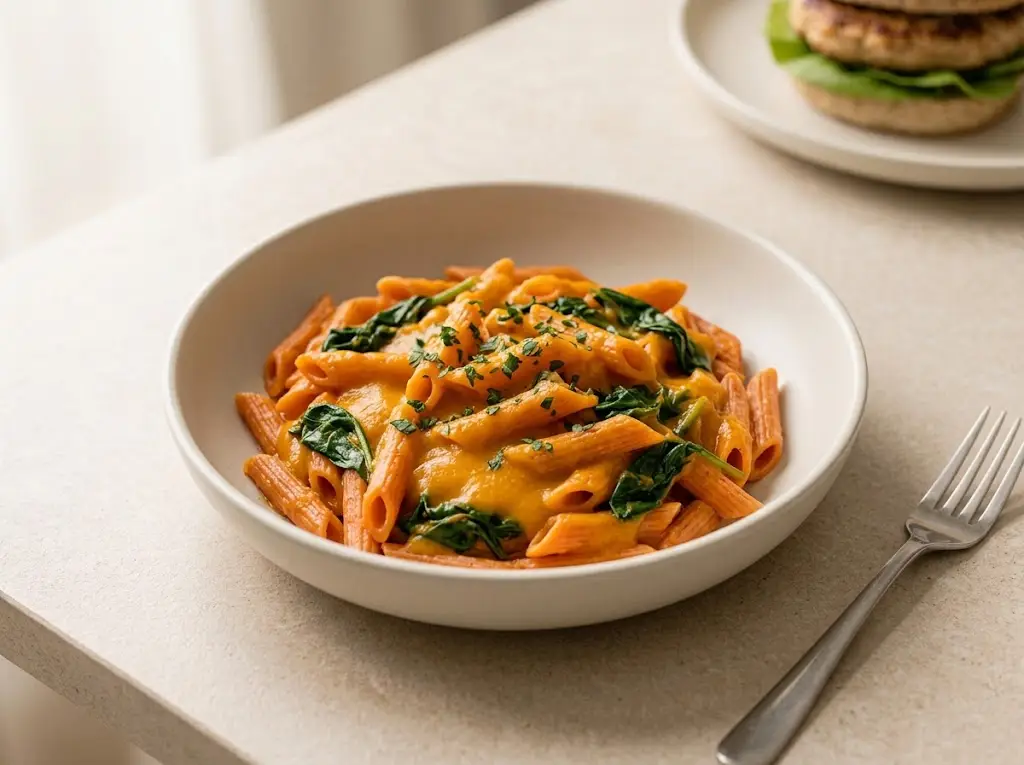
Lunch or dinner | Approx. prep: 10 minutes | Cook: 15–20 minutes | Servings: 1
Tomato-based pasta sauces can be troublesome for some people with acid reflux. A simple pumpkin sauce provides another way to prepare pasta without relying on tomatoes, citrus juice, or chili.
Red lentil pasta also supplies plant-based protein and fiber. However, lentils can cause gas or bloating in some people, so regular wheat or rice pasta may be a better option if legumes cause discomfort.
Ingredients
- 60–75 g (approximately 2–2½ oz) dry red lentil pasta
- ½ cup plain, unsweetened pumpkin purée
- ¼ cup water or low-sodium vegetable broth without trigger ingredients
- 1 teaspoon olive oil
- ½ cup chopped spinach or zucchini
- 1 tablespoon fresh parsley or sage
- Salt to taste, optional
Instructions
- Cook the red lentil pasta according to the package instructions.
- While the pasta cooks, place the pumpkin purée in a small saucepan.
- Add the water or broth and stir until the sauce reaches your preferred consistency.
- If using zucchini, add it to the sauce and simmer until tender, about 5–7 minutes. If using spinach, add it during the final 1–2 minutes and cook until wilted.
- Stir in the olive oil and herbs.
- Drain the pasta and toss it with the warm pumpkin sauce.
- Serve immediately.
Make It More Reflux-Friendly
If red lentil pasta causes bloating: Substitute regular wheat, whole-wheat, or rice pasta according to your tolerance.
If pumpkin sauce seems too thick: Add a little warm water rather than cream or large amounts of oil.
If using packaged pumpkin sauce: Check for tomato, citrus juice, chili, garlic, onion, and large quantities of added fat, depending on your personal triggers.
If you want more protein: Add a small portion of plain cooked chicken or firm tofu rather than a fatty meat topping.
Pumpkin sauce is a tomato-free alternative for people who find acidic pasta sauces uncomfortable. Adjust the seasoning and serving size according to your tolerance.
How to Adjust These Meals for Your Acid Reflux Triggers
The most useful GERD-friendly recipe is one you can comfortably eat while maintaining a balanced diet.
According to the NIDDK’s dietary guidance for GERD, foods and drinks commonly associated with symptoms include tomatoes, citrus fruits, chocolate, coffee, alcohol, mint, spicy foods, and high-fat foods. However, not everyone reacts to every item.
Use these substitutions as starting points rather than strict rules.
| If This Triggers Symptoms | Try Instead |
|---|---|
| Tomato-based sauces | Plain pumpkin or squash sauce |
| Garlic and onion seasoning | Parsley, basil, dill, or thyme |
| High-fat mayonnaise | A small amount of plain low-fat yogurt |
| Whole eggs | Egg whites |
| Fried chicken or fatty burgers | Baked chicken or a lean patty |
| Citrus-based dressings | A tolerated yogurt-and-herb dressing |
| Large portions of beans or lentils | Smaller portions or firm tofu |
These substitutions are starting points, not universal rules. Choose ingredients according to your individual tolerance.
Do You Need to Avoid Every Common GERD Trigger?
No. Avoiding every food commonly associated with reflux can make meals unnecessarily restrictive.
The 2022 American College of Gastroenterology guideline supports avoiding personally troublesome foods but rates the evidence for this recommendation as low. It does not establish that all people with GERD need the same restrictive diet.
A 2024 systematic review of 21 intervention studies found that low-carbohydrate diets reduced esophageal acid exposure, while slower eating did not significantly reduce reflux events. Evidence for many other dietary interventions remained limited, highlighting the need for more high-quality research. Read the 2024 systematic review.
If you’re uncertain which foods cause symptoms, consider recording what you eat, the approximate portion size, when you eat, and whether symptoms follow. Look for recurring patterns rather than drawing conclusions from one episode.
Our broader GERD-friendly foods guide explains food choices in more detail.
What to Drink With Reflux-Friendly Meals
Water is a simple choice with meals. Other options include caffeine-free, non-mint herbal tea, low-fat milk, or unsweetened plant-based milk, depending on your tolerance.
Coffee, alcohol, peppermint, and acidic drinks may worsen reflux symptoms in some people. Choose beverages based on your personal triggers rather than following a universal list of restrictions.
Practical Eating Tips for Managing Acid Reflux
The recipes above are designed to make meal planning easier. When and how much you eat can also affect symptoms.
1. Adjust Portions to Your Comfort Level
If large meals consistently lead to heartburn or regurgitation, try smaller portions and avoid eating until you feel uncomfortably full.
The American Gastroenterological Association’s patient guidance suggests smaller, more frequent meals as one possible lifestyle adjustment.
The serving sizes in these recipes are examples, not medically prescribed limits. Adjust them to your appetite, nutritional needs, and symptom response.
2. Avoid Eating Shortly Before Bedtime
For people who experience reflux at night or when lying down, meal timing may be particularly important.
The NIDDK recommends eating at least three hours before lying down or going to bed when nighttime symptoms are a concern.
For example, if you normally go to bed at 10 p.m., aim to finish dinner by around 7 p.m.
3. Avoid Unnecessary Dietary Restrictions
GERD is not the same condition as food intolerance or irritable bowel syndrome (IBS).
You do not automatically need a gluten-free, dairy-free, or low-FODMAP diet simply because you experience reflux.
If foods such as beans, lentils, whole grains, or dairy consistently cause uncomfortable symptoms, discuss possible dietary changes with a healthcare professional or registered dietitian.
For more guidance on eating patterns and portion awareness, visit our mindful eating and portion control guide.
When Reflux-Friendly Meals Are Not Enough
Changing what and when you eat may reduce symptoms, but diet alone does not reliably control GERD in everyone.
Frequent or persistent reflux can require medical assessment and treatment, including acid-suppressing medication when appropriate.
The American Gastroenterological Association’s clinical practice update emphasizes individualized management that may combine dietary and lifestyle measures with medication and diagnostic evaluation.
Contact a healthcare professional if heartburn or regurgitation occurs regularly, becomes more severe, interferes with sleep or eating, or continues despite reasonable self-care measures.
Seek prompt medical assessment for difficulty swallowing, painful swallowing, unexplained weight loss, persistent vomiting, or signs of gastrointestinal bleeding, such as vomiting blood or black, tarry stools.
New, severe, or unexplained chest pain should not automatically be attributed to acid reflux. Seek emergency medical care, particularly when chest pain is accompanied by shortness of breath, sweating, faintness, or pain spreading to the arm, jaw, or back.
These precautions are consistent with NIDDK guidance on GERD symptoms and when to seek care and the American College of Gastroenterology guideline.
FAQ
Baked chicken with rice and steamed vegetables is a simple option. Pasta with a mild pumpkin sauce is another alternative if tomato-based sauces trigger your symptoms.
Eggs can be part of a GERD-friendly diet if tolerated. Egg whites contain less fat than whole eggs and may be preferable for people sensitive to high-fat meals.
Yes, if you tolerate it. Because avocado is relatively high in fat, start with a small portion and adjust according to your symptoms.
Pasta is not automatically a reflux trigger. Sauces, toppings, and portion sizes may matter more. Try a mild vegetable-based sauce if tomato sauce causes discomfort.
No specific food has been reliably shown to stop an active heartburn episode. If symptoms occur frequently or persist despite dietary changes, consult a healthcare professional about appropriate treatment.
The Bottom Line
GERD-friendly meals don’t have to be complicated. These five recipes offer flexible ways to combine lean proteins, vegetables, grains, and mild seasonings.
Start with ingredients you enjoy, adjust portions according to your personal triggers, and seek medical advice if reflux symptoms persist.